-
Wallpaper
Sort by Colour
Sort by Style
Shop by Collection
- Murals
- Fabric
- Cushions
- Window Film
- Accessories
- Sale
- Information
- News

28th Sep 2026
Modern life moves quickly, and most of us are looking for ways to slow it down a little. Home is the natural place to begin.
Nature-inspired wallpaper and grounding earth tones are one of the simplest ways to shift the feeling of a room. Research into biophilic design — the idea that we respond well to natural forms and materials indoors — suggests that bringing the outdoors in can help us feel calmer and more settled. Whether or not you go in for the science, most of us know instinctively that a room in soft clay and deep green feels different from one in bright white.
This autumn, we’re drawn to designs that do exactly that: quiet botanicals, warm grounded colour, and patterns that reward a second look rather than demanding attention.
This autumn, we’re drawn to designs that do exactly that: quiet botanicals, warm grounded colour, and patterns that reward a second look rather than demanding attention.
*** IMAGE 1
What colours feel most grounding at home?
Earthy and warm hues. Deep olives and dark greens, burnt terracotta, soft clay and rich brown are the colours of the natural world, and they bring that steadiness indoors. They work particularly well in rooms where you want to settle — a snug, a bedroom, a reading corner.
Try Ombre Octopus Coral & Umber, a warm, earthy clay backdrop with large-scale two-tone ombre octopus or Poppy Mushroom for something a little quieter. For real depth, Deep Sea Poseidon layers large aquatic leaves into a woven play of light and shadow.
*** IMAGE 2
Sophisticated contrast. A dark backdrop lifted with metallic or fine line work catches low autumn light beautifully and adds a sense of depth that flat colour can’t manage on its own. Skylark Onyx and Dots Night Light both do this quietly, while Tarn Reflection scatters light across a deep ground.
*** IMAGE 3
Which patterns work best in a calm interior?
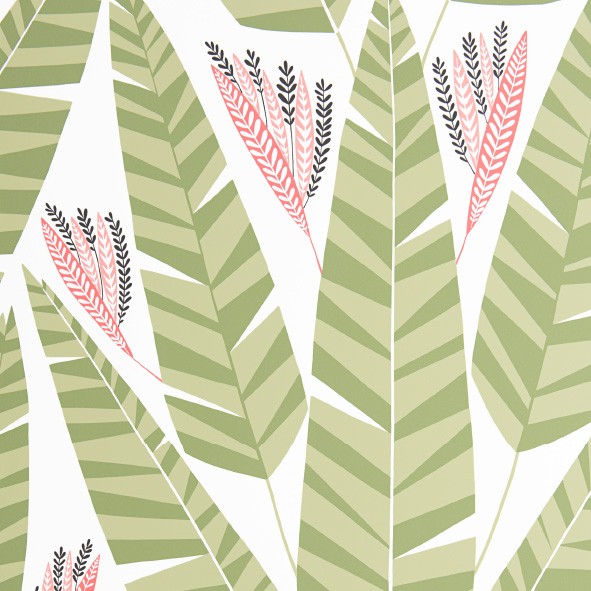
Restrained botanicals. Smaller-scale foliage and simple branch and leaf motifs sit far more comfortably in a room you want to relax in than large, busy blooms. They give texture without noise, and they’re far more forgiving in a small space.
Fern Pampas and Little Trees Top Coat are both good examples — pattern you notice slowly.
Quieter florals. Botanical prints have loosened up. Where once they were literal and dense, the mood now is looser, more abstract and a little playful. The result feels softer, more timeless, and considerably easier to live with.
Halo Flower is our newest example, inspired by the Australian gum blossom and its firework-like blooms — flowers without petals, all stamens, full of nectar for bees and other pollinators. Snowdrops Evergreen and Leaf Berry Forest.
*** IMAGE 4
Where to use darker, grounding colours
Dark wallpaper is often assumed to be for large rooms only, which isn’t really true. A deep colour in a small space — a cloakroom, a hallway, the wall behind a bed — can make it feel considered and enveloping rather than cramped.
The trick is light. Rooms that get little natural light suit dark paper particularly well, because you stop fighting the shortage and lean into it instead. Add warm lamplight rather than overhead lighting and the effect is immediate.
Browse the full dark wallpaper collection or the botanical designs to see the range together.
A note on how ours are made
All our wallpapers are printed in the UK, using the latest ecological processes and techniques to minimise waste and water usage. Most are non-woven, which means you paste the wall rather than the paper — quicker to hang, and easier to take off again when you fancy a change.
Common questions
What is biophilic design? The principle that people respond well to natural forms, materials and light in the spaces they live and work in. In practice it means bringing plants, natural textures and nature-inspired pattern indoors.
Which wallpaper colours suit a north-facing room? Warm earth tones — clay, terracotta, warm olive — counter the cool light a north-facing room receives. Cooler greys and blues can make it feel colder still.
Is dark wallpaper a bad idea in a small room? Not at all. Dark colour in a small space often reads as intimate rather than cramped, particularly with warm lighting and in rooms used mainly in the evening.
How much wallpaper will I need? Our wallpaper calculator will work it out from your wall measurements.